How Do Manufacturers Prevent Corrosion Problems In The End Caps?
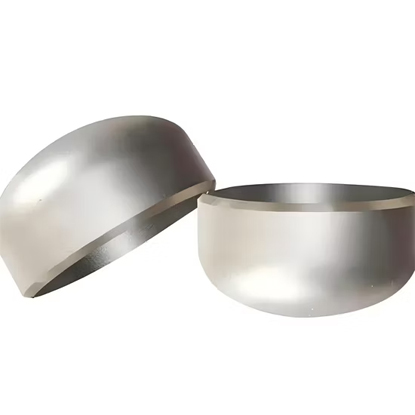
stainless steel weld caps are crucial components of pressure vessels, boilers, pipelines, and other equipment. Their function is to seal the ends of containers or pipelines to withstand internal pressure. Therefore, the corrosion of end caps not only affects equipment safety but also production stability and economy. Manufacturers typically employ various measures to prevent steel buttweld caps corrosion, including material selection, design optimization, coating protection, and regular maintenance. Here are some common anti-corrosion measures:
Material Selection
butt weld pipe cap corrosion is usually closely related to the corrosion resistance of the materials used. When selecting materials, manufacturers consider using alloy materials or corrosion-resistant steels with excellent corrosion resistance. Common materials include:
-
Stainless Steel: Stainless steels such as 304 and 316 have good corrosion resistance and are suitable for most common corrosive environments.
-
Nickel Alloys: Used in high-temperature or highly corrosive media environments, they possess extremely strong corrosion resistance.
-
Carbon Steel Coatings: In some applications, carbon steel end caps are coated or sprayed with anti-corrosion layers to improve corrosion resistance.
Coating Protection
The surface coating of end caps is one of the important means of preventing corrosion. Manufacturers typically apply an anti-corrosion coating to the surface of the stainless buttweld caps, such as:
-
Epoxy coating: Excellent water and chemical corrosion resistance, commonly used for end cap protection in petrochemical, heat exchanger, and other equipment.
-
Polyurethane coating: Provides strong water and acid/alkali corrosion resistance, suitable for harsher environments.
-
Ceramic coating: Suitable for high-temperature or special environments, offering excellent wear and corrosion resistance.
Corrosion Protection Design
The design of the end cap also affects corrosion. Manufacturers usually incorporate the following anti-corrosion design measures:
-
Appropriate welding process: Welded areas are prone to corrosion. Manufacturers optimize welding processes to reduce stress concentration and residual stress in the welds, thereby reducing the likelihood of corrosion.
-
Drainage design: Drainage holes or self-drainage mechanisms prevent the accumulation of moisture or corrosive media inside the end cap.
-
Appropriate thickness design: Ensures sufficient structural strength and corrosion resistance for the stainless steel buttweld caps, preventing failure due to localized corrosion.
Cathodic Protection
Catholic protection is a technique that reduces end-cap corrosion by applying an external current. It is commonly used in marine or underground environments, especially on the outer surfaces of pipes or pressure vessels. By using sacrificial anodes or external current sources, the corrosive effects on the end-cap are reduced.
Regular Maintenance and Inspection
Regular inspection and maintenance are crucial for preventing end-cap corrosion. Manufacturers typically develop regular inspection and maintenance plans, using non-destructive testing techniques such as ultrasonic, X-ray, and magnetic particle testing to inspect end-caps, promptly detecting corrosion or cracks and preventing further deterioration.
Environmental Control
In some extremely corrosive environments, manufacturers also reduce the risk of end-cap corrosion by controlling the operating environment:
-
Controlling temperature and humidity: Especially in environments with high humidity or large temperature differences, manufacturers control the operating temperature and humidity of equipment to reduce corrosion.
-
Using corrosion inhibitors: Adding corrosion inhibitors inside pipes or containers can effectively slow down the corrosion rate of end-caps.
Summary
Manufacturers' measures to prevent end-cap corrosion are multifaceted, involving material selection, coating protection, design optimization, regular maintenance, and environmental control. By comprehensively utilizing these technologies, the service life of equipment can be effectively extended, production safety can be ensured, and maintenance costs can be reduced.